Does handedness matter in brushing?
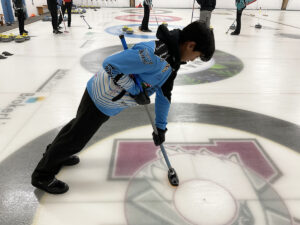
Functional laterality – that is, handedness, footedness, and ocular dominance, are important physical characteristics in many team sports, such as ice hockey and baseball, or in racquet sports such as tennis, squash, and badminton. Handedness is often less of an issue in other sports, particularly individual sports, such as darts, or golf. Handedness, in particular, has been studied extensively [1,2]. Handedness refers to an individual’s preferential use of one hand over the other due to strength, quickness, or dexterity. The preferential hand is commonly referred to as the dominant hand. About 10% of the human population is left-handed, though this proportion does vary slightly by gender (males 10.5%, females 8.7%) [1,2], with 1% of the population being ambidextrous, having an equal ability with both hands. Taylor Stremick of Team Ashley Thevenot of Saskatoon being tested on a CurlSmart instrumented brush at the Sutherland Curling Club. To a significant degree, in many sports the advantage for a left-handed athlete is simply
Using lasers in curling – an update
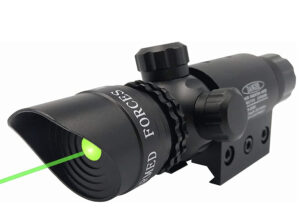
In the five years since John Newhook and I drafted this document describing the use of lasers in curling the technology has continued to improve and become more affordable, so it seemed like an update was in order. With many curling clubs moving to LED lighting for their arenas, green light lasers have now become the norm, rather than the exception, and their cost has plummeted. The lasers that I use (see below) can now be purchased from Amazon for a mere $38.69 Canadian, a significant drop from five years ago. Even a rechargeable, green laser pointer for presentations can be had for only $16, a long way from the nearly $200 I spent on a red laser pointer when I was in graduate school at the University of Manitoba. Of course, none of the lasers for sale anywhere are intended for curling, and the majority are intended for one of three use cases: for use with a firearm, usually
SWEEP!
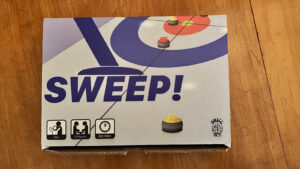
SWEEP! is a curling board game for two players (or teams), aged 14+, developed by my friend Michael Demko and available for online purchase from The Game Crafter. While being a very talented Computer Scientist in his daily work, Michael, who is a University of Waterloo alumnus and originally hails from Yellowknife, NWT, is also an avid curler and has been developing SWEEP! for several years. In SWEEP!, Mike has put together a game that combines elements of curling strategy and tactics with aspects of the randomness of shot outcomes – for example, a “miss” can result in a roll to the left, to the right, or a roll-out – in a game suitable for players who are teens or older. The board The board consists of twelve “zones”, six zones being in the rings – three in front of the tee line, and three behind – along with another six zones in front of the rings for guards. For
Curling Canada’s Singles App
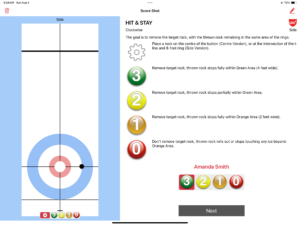
Curling Canada’s Singles app, a free application for both Apple and Android devices, permits an athlete or a coach to evaluate their shot-making skills and record and review results through a season. In addition, athlete and team scores can be compared to other athletes across Canada. In my experience, the existence of the Singles app is unknown to many coaches, especially U15 or U18 coaches who are new to coaching; hence this article. The Singles application leads an athlete or coach through specific shots whose number and level of difficulty are pre-determined by the age range(s) of the athletes: U15, U18, U21, or U25+. The application supports two distinct operational phases: competition and practice. For competition, the athletes “compete” through a series of shots with the thrower accumulating points for shots made (one or two of their teammates brush, and another holds the broom). Shot-making points are accumulated through the exercise and the athlete with the highest number of points
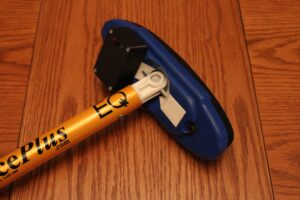
Instrumented Curling Brushes and the CurlSmart brush
I frequently receive questions about the instrumented brush that I use when testing athletes. An instrumented brush is a “game-changer” in the coaching of the sport of curling, because the effectiveness of an athlete cannot be determined statically (for example, by using a bathroom scale). Rather, brushing involves movement, and an instrumented brush is able to measure various characteristics of an athlete’s brushing profile to give essential guidance to a coach to help improve their technique. The instrumented brush that I use is a prototype developed by Dr. John Newhook of Dalhousie University, and is described in some detail in the article shown at right. In a nutshell, the brush captures (via a strain gauge) the vertical force generated through the handle at a sampling rate of 100 Hz. The force data from the brush is transmitted to a laptop Windows computer running proprietary software that (a) converts the values from the brush into “forces” in kilograms, for better understanding
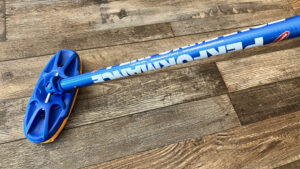
Curling brushes – Try before you buy – Part Deux
On April 13th I’ll be one of the coaches at the Ontario Curling Council U18 Academy camp at the Dundas Valley Golf and Curling Club in Dundas, ON. In the first part of this article I mentioned that one of things I like to do when coaching at a camp is to bring along a large broom bag with an assortment of brushes from my collection, so that the athletes have an opportunity to try out various brushes that are different from the one they use regularly. It is unsurprising to me how frequently an athlete will profess a liking for a particular brush in my collection that is different from the one they have. Most often that difference relates to the handle, and not the brush pad. While debate over the utility of the various brush pads from the different manufacturers continues, what is frequently overlooked are the handles, and the characteristics of a given handle does impact the